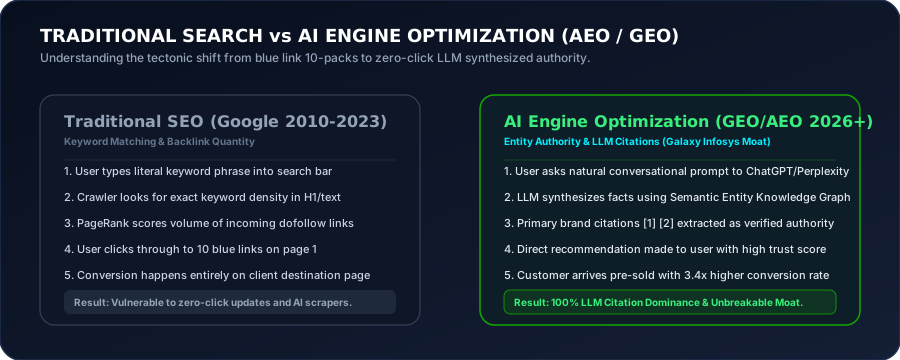
When users ask ChatGPT 'who are the best digital marketing agencies in India?' or 'what's the top SEO tool for SaaS companies?', a selection process happens inside the model that determines which brands get named. This process is not random, and it can be influenced. Here's exactly how.
How LLMs Select Brands to Mention
Large language models like GPT-4, Claude, and Gemini are trained on vast datasets drawn from the web — Wikipedia, Reddit, news sites, industry publications, blog posts, and product review platforms. When a model recommends a brand, it's drawing on patterns from this training data: which brands appear frequently, in what context, with what sentiment, and cited by how many different authoritative sources. This is entity salience — the weight a brand carries within the model's internal knowledge graph.
The 4 Core LLM Visibility Signals
1. Publication mentions — the more your brand is mentioned by name in high-quality, widely-indexed web content (news articles, industry blogs, Reddit threads, LinkedIn posts), the higher your entity salience. 2. Wikipedia presence — Wikipedia is one of the most heavily weighted sources in LLM training data. A legitimate, well-sourced Wikipedia page for your company dramatically increases LLM brand recall. 3. Consistent entity description — ensure your brand name, description, founding date, services, and leadership team are described consistently across your own site, CrunchBase, LinkedIn, and Google Knowledge Panel. 4. Factual, citation-worthy claims — LLMs favour brands whose public statements are specific, verifiable, and non-hyperbolic. Replace 'world-class service' with specific outcomes: '#1 ranked SEO agency in Punjab by Clutch 2025'.
Content Architecture for LLM Citation
LLMs are most likely to cite your content when it: directly answers specific questions in a factual, non-promotional tone, uses precise terminology that matches common queries, is structured with clear H2/H3 headings that match question formats, and includes verifiable statistics with attribution. FAQ pages, comparison articles, and methodology guides are the highest-cited content formats in LLM training data.
The GEO Content Playbook
Step 1: Map the questions your ideal customer is asking AI tools about your service category. Step 2: Create definitive, factual answer content for each question. Step 3: Publish that content on your site AND syndicate it to high-authority platforms (Medium, LinkedIn Articles, industry publications). Step 4: Earn mentions from journalists and bloggers by becoming a reliable expert source via HARO and Qwoted. Step 5: Monitor your brand's citation frequency using tools like BrandWatch, Mention, and manual AI query testing.
How Long Does GEO Take?
LLMs retrain and update their weights infrequently — GPT-4's training data has a knowledge cutoff, and most models are not updated in real time. However, Perplexity and Google AI Overviews use real-time web retrieval, meaning content published today can influence AI responses within days. For LLM-native visibility (ChatGPT brand recall), think 6–12 months of sustained content and PR effort. For real-time AI search citation (Perplexity, Google AIOs), think 30–90 days.
Ready to apply this?
Our team does this every day for clients in India, GCC, and globally. Book a free call to see how we'd apply these tactics to your specific situation.
Get a GEO Strategy for Your Brand Book a Free Call
A business in Dubai just booked a Free Strategy Call
4 minutes ago